
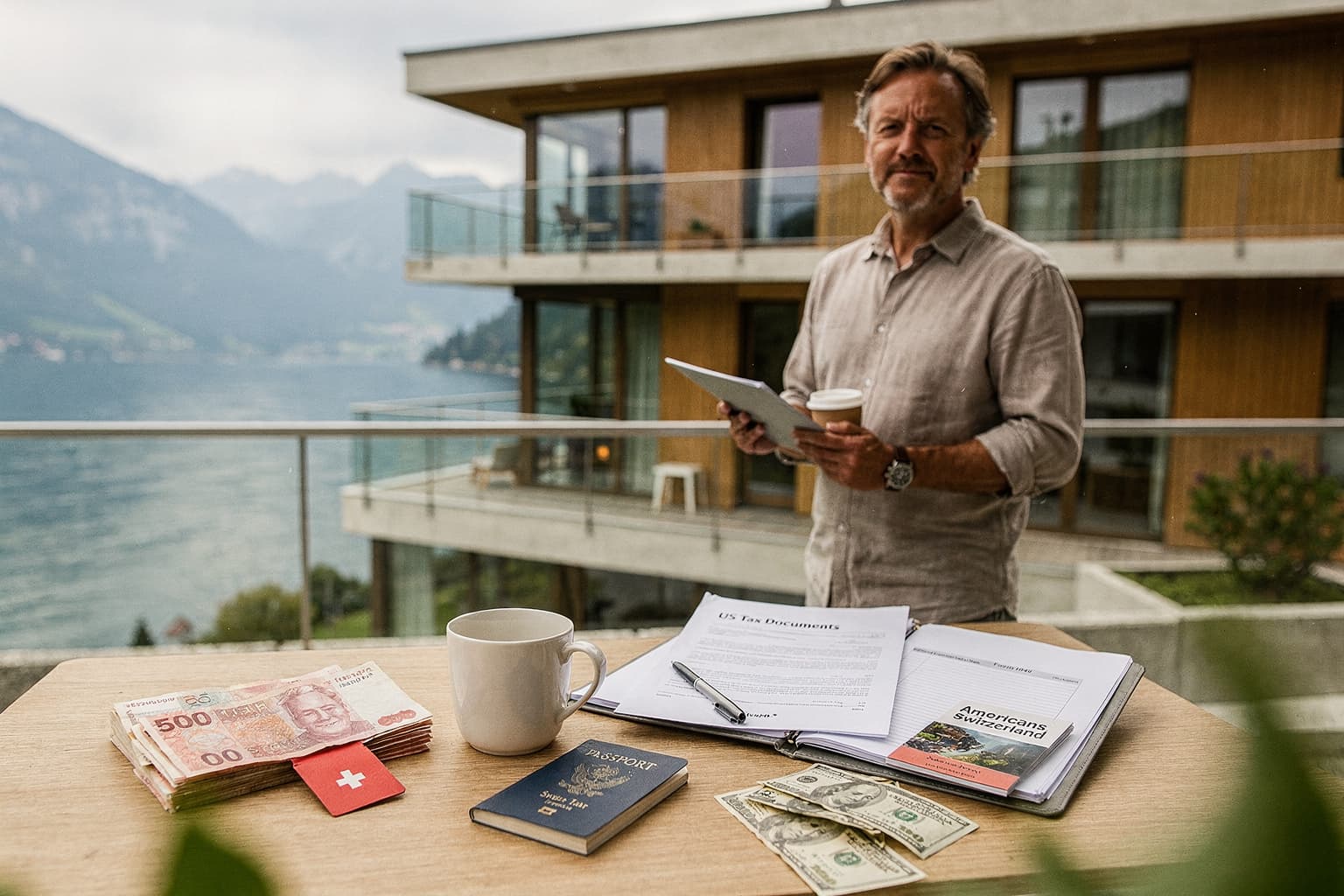
Who Can Actually Buy Property in Switzerland?
Lex Koller is the Swiss federal law that restricts foreign ownership of real estate to prevent speculation and preserve housing stock for residents. The good news: if you hold a Swiss residence permit, you're likely exempt from these restrictions and can buy property just like a Swiss citizen in your canton of residence.
US citizens with a B permit (residence) or C permit (settlement/permanent residence) face no Lex Koller barriers when purchasing a primary residence in the canton where they're registered. You can buy an apartment in Zurich, a house in Geneva, or a chalet in the mountains—as long as it's in your canton and you intend to live there. No special authorization required, no waiting period, no quota.
The restrictions kick in for non-residents or those without qualifying permits. If you're a US citizen living abroad who wants to buy Swiss property as an investment or vacation home, you'll need government authorization under Lex Koller. These permits are rarely granted for pure investment properties. However, exceptions exist for primary residences in designated resort zones (think Verbier, Gstaad, St. Moritz) and for certain commercial property purchases, though both come with strict conditions and caps on total foreign ownership in those areas.
Permit Status Matters
Your ability to buy depends on your residence status at the time of purchase. If you're on a short-term L permit or haven't yet moved to Switzerland, consult a Swiss real estate attorney before making an offer—Lex Koller compliance is determined at closing, and violations can void the sale.
How Swiss Mortgages Work: Structure and Affordability
Swiss mortgage lending operates differently from the US system, with higher loan-to-value ratios but stricter ongoing affordability requirements. Banks will typically lend up to 80% of the property's market value, meaning you need a 20% down payment in cash or securities. That down payment can come from your pillar 2 pension (with restrictions for amounts over 10%), pillar 3a savings, or liquid assets.
Many Swiss mortgages are structured as interest-only loans with separate amortization schedules. You pay interest monthly, then amortize (pay down) the principal over time through annual cash payments or by pledging pillar 3a contributions. Banks require you to reduce the mortgage to two-thirds of the property value (67% loan-to-value) by retirement age, which typically means amortizing 13-15% of the original loan amount over your working years.
The affordability test is where many buyers hit constraints. Swiss lenders require that your total housing costs—mortgage interest calculated at an imputed rate (usually 5% regardless of actual rate), amortization, and maintenance (typically 1% of property value annually)—do not exceed roughly 33% of your gross household income. This imputed interest rate is a stress test: even if today's mortgage rate is 2%, the bank calculates affordability at 5% to ensure you can handle rate increases.
- Down payment: minimum 20% of market value, from cash or pension withdrawals
- Amortization requirement: reduce loan to 67% LTV by retirement, typically 1% of loan value per year
- Affordability cap: total housing cost at imputed 5% interest must stay under ~33% of gross income
- Interest structure: many loans are variable or short fixed-term (2-10 years), then renegotiated
US Tax Treatment of Swiss Property and Mortgages
Owning Swiss real estate doesn't exempt you from US tax obligations, but the mechanics are straightforward once you understand the reporting and deduction landscape. The property itself is not a financial account, so you don't report it on FBAR or FATCA forms unless you're renting it out and the rental income flows through a foreign account that crosses reporting thresholds.
Swiss mortgage interest is deductible on your US tax return if you itemize, subject to the same limitations that apply to domestic mortgages under the Tax Cuts and Jobs Act. However, most US expats in Switzerland use the Foreign Earned Income Exclusion (FEIE) or foreign tax credits to eliminate US tax on their salary, which means their US taxable income is often too low to benefit from itemizing. The mortgage interest deduction has real value only if you're paying significant US tax after exclusions and credits—check your specific situation before assuming a tax benefit.
If you rent out the property or a portion of it, that rental income is taxable in both Switzerland and the US. Switzerland taxes it first (often at cantonal rates), and you claim a foreign tax credit on your US return for the Swiss tax paid to avoid double taxation. Keep meticulous records: Swiss tax authorities and the IRS both want documentation of rental income, expenses, and any mortgage interest allocated to the rental portion.
Currency and Tax Interaction
You'll pay your mortgage in Swiss francs but calculate US tax in dollars. A strengthening franc increases your US-dollar basis in the property and can create foreign exchange gains on sale, which are taxable in the US even if you reinvest in another Swiss property. Track your franc-dollar exchange rate at purchase for future capital gains calculations.
Renting vs. Buying: The Strategic Calculation
The financial case for buying in Switzerland isn't always obvious. Swiss real estate appreciates slowly in most regions (historically 1-3% annually in inflation-adjusted terms), and transaction costs are significant: notary fees, land registry charges, transfer taxes, and often a buyer's agent commission add up to 3-5% of the purchase price depending on canton. You need to own for several years just to break even on those costs.
Renting offers flexibility—no Lex Koller concerns if you're on a temporary assignment, no capital tied up in a single illiquid asset, and no exposure to Swiss property market stagnation or correction. If your employer subsidizes your housing or you expect to move cantons (or leave Switzerland) within five years, renting often makes more financial sense than buying and paying transaction costs twice.
Buying makes strategic sense when you have long-term stability in one location, want to control your living space (renovations, pets, lifestyle), and can afford the down payment without depleting emergency reserves or retirement savings. The mortgage interest rate environment also matters: when Swiss rates are near historic lows and you can lock in a long fixed term, the carry cost of ownership drops significantly. But remember the opportunity cost—that 20% down payment could alternatively grow in a diversified portfolio or remain liquid for other life goals.
33%
Maximum share of gross income that housing costs (interest, amortization, maintenance) should consume under Swiss affordability rules
Estate Planning and Inheritance Considerations
Swiss property passes under Swiss inheritance law when you die, regardless of your US citizenship. Switzerland has forced heirship rules: your children are entitled to a statutory share of your estate (the exact fraction varies by canton and number of heirs), and you cannot fully disinherit them by will. This can conflict with US estate planning strategies that assume full testamentary freedom.
If you own Swiss real estate, coordinate your US will and any Swiss estate planning documents to ensure they don't contradict. Some cantons allow you to elect US law for succession (since you're a US citizen), but this requires explicit documentation and legal advice in both jurisdictions. Without coordination, your heirs could face conflicting claims, forced liquidation, or unexpected tax consequences in either country.
US estate tax applies to your worldwide assets, including Swiss property, if your total estate exceeds the federal exemption (over $13 million per individual as of recent years, though this amount is subject to legislative change). Swiss inheritance tax varies dramatically by canton—some cantons exempt direct descendants entirely, others impose significant rates. Your heirs may owe tax in both countries on the same property, though Switzerland and the US have an estate tax treaty that provides some relief through credits.
Cross-Border Probate
If you own property in Switzerland and the US, your estate will go through probate in both countries. Appoint executors familiar with both systems and ensure your family knows where to find all relevant documents—Swiss notarial deeds, US wills, and any matrimonial property agreements.
Practical Steps Before You Buy
Start with affordability: run the Swiss bank calculation yourself before you fall in love with a property. Take your gross household income, multiply by 0.33 to get your maximum annual housing budget, then subtract estimated amortization (1% of loan amount) and maintenance (1% of property value). What's left is your annual interest budget—divide by the loan amount you'd need and see if the imputed 5% rate is realistic.
Get mortgage pre-approval from a Swiss bank before making an offer. Sellers and agents take you more seriously with financing in hand, and you'll know exactly what you qualify for under Swiss lending rules. Bring recent pay stubs, tax returns (both Swiss and US), proof of your down payment source, and your residence permit. If you're self-employed, expect additional scrutiny and possibly lower loan-to-value limits.
Budget for transaction costs up front: notary fees (often 0.5-1%), land registry (0.3-0.5%), and cantonal transfer taxes (varies widely, 1-3% in most cantons) all come due at closing. You'll also pay for a property appraisal (required by the bank), legal review of the purchase contract, and any mortgage arrangement fees. None of these are financed—you pay them in cash on top of your down payment.
- Verify your Lex Koller status: confirm your permit type and canton of residence exemption
- Calculate affordability at imputed 5% interest, including amortization and maintenance
- Secure mortgage pre-approval with a Swiss lender, showing income and down payment proof
- Review US tax impact: will you itemize? How will rental income (if any) be taxed in both countries?
- Coordinate estate planning: align your US will with Swiss forced heirship and inheritance tax rules
When Buying Makes Sense—and When It Doesn't
Buying Swiss real estate as a US citizen is legally straightforward if you hold the right residence permit, financially achievable with a 20% down payment and solid income, and strategically sound when you have long-term stability and want control over your living situation. The complexity lies in navigating two tax systems, understanding Swiss mortgage affordability rules that differ from US norms, and planning for cross-border estate issues that most single-country homeowners never face.
This is not a decision to make based solely on monthly payment comparisons or gut feel about the property market. The right choice depends on your timeline in Switzerland, your broader financial goals (retirement savings, liquidity, currency diversification), and how home ownership fits into your overall wealth plan across both countries. If those variables are still moving, or if you're uncertain about the tax and estate planning implications, that's not a reason to avoid buying—it's a reason to get specific, cross-border advice before you sign.
The mortgage might be in francs and the deed recorded in a Swiss canton, but the full financial picture spans two tax systems, two currencies, and two legal frameworks. Understanding all three layers is what turns a housing decision into a sound long-term strategy.